
DXY records best yearly start since 2015
Boris Kovacevic – Global Macro Strategist
Last week ended with a blockbuster US jobs report that pushed equity benchmarks to fresh records and the US dollar to a 7-month high. The S&P 500 closed 13 of the last 14 weeks in green and has risen by more than 20% since November alone. The Greenback climbed higher for a fifth week in a row, buoyed by the two-year Treasury yield recording its strongest day so far this year, rising by 3.87% on Friday. Surprisingly, not much has changed when looking at the market’s pricing of Fed policy. Investors still see May as the most likely beginning of the easing cycle with six rate cuts being priced in for the whole of 2024. The US dollar (DXY) had the strongest start to any year since 2015, having risen against 73% of its peers in January and being up against 71% so far in February. The Greenback has reversed its two-month losing streak that started in November and has been supported by an outperforming US economy and stagnating yields.
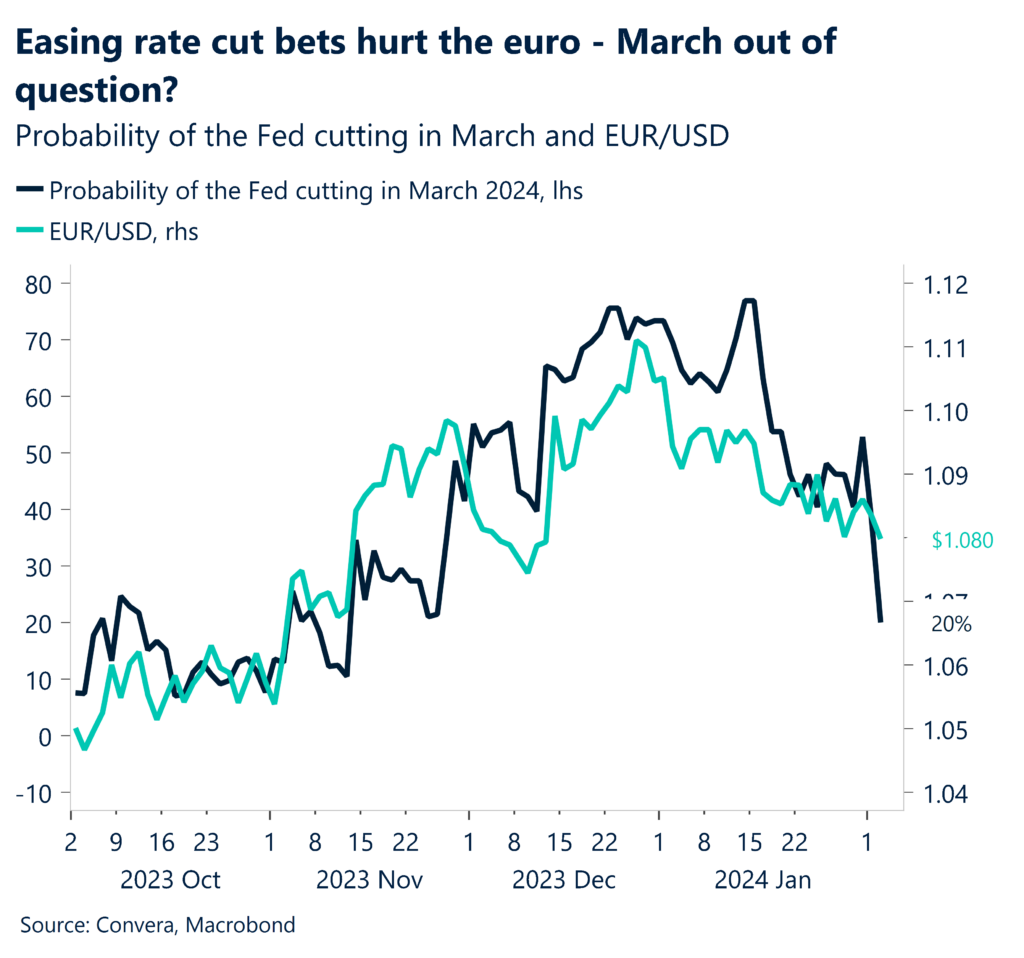
The catalyst for the market volatility on the last day of trading came in the form of the non-farm payrolls report, which showed that the US economy added 353 thousand people to its work force in January. It was the biggest monthly increase in a year and a clear upside surprise of the consensus forecast of 180 thousand. The annual benchmark revision to earlier data from the BLS confirmed that 359 thousand more jobs were added in 2023 than previously expected. Average hourly earnings picked up from 4.3% in December to 4.5% in January, showing some acceleration of wage growth. Seasonality effects make an immediate interpretation of the job report difficult. However, given the current resilience of the labour market, the March meeting does seem to be out of question when it comes to the Fed cutting interest rates.
The last two weeks have given us major central bank decisions and tier one macro data. The only two things we are watching in the US this week are the ISM services report on Monday and the annual revision of the CPI methodology on Friday. Given the lack of important releases on the macro front, political and geopolitical questions might be more market driving than usual. The government bond auctions on Monday (3-month and 6-month Bills), Tuesday (3-year Note) and Wednesday (10-year Note) might be watched as well due to the highly expansionary fiscal policy of the US government.

Sterling slammed after US jobs report
George Vessey – Lead FX Strategist
Thanks to hawkish repricing in Bank of England (BoE) rate expectations, helped by stronger-than-expected UK inflation and PMI prints, the first month of the year was a broadly positive one for the pound as it appreciated against almost 80% of 50 global currencies. February also started positive, and the pound was the best performing G10 currency year-to-date until the blowout US jobs report rattled markets last Friday and sent sterling tumbling.
As expected, the BoE left interest rates unchanged last week but removed its tightening bias and opened the door to rate cuts. The market reaction was limited at the time, but a frantic Friday following the US jobs report saw sterling drop almost two cents, from near $1.28 towards $1.26 against the dollar. It was GBP/USD’s worst week since early December. With US-UK yield expectations narrowing, it appears unlikely a new 2024 high will be recorded in the near-term. We could even witness a breakout lower towards the 50-week moving average located nearer to $1.25. The lack of top-tier data this week means geopolitical developments and sentiment will likely drive trends in the FX market, hence the pound’s weakness this morning after the US launched retaliatory airstrikes in the Middle East over the weekend.
We will keep an eye on some domestic events though. The British Retail Consortium’s retail sales report on Tuesday, a batch of housing data on Wednesday and several BoE officials speaking throughout the week. We’re also wary of the pound’s positioning risk given speculative bets on the GBP appreciating are stretched, well above their long-term average. An unravelling of these bets could accelerate the decline in GBP/USD.

Worst Euro January performance since 2015
Ruta Prieskienyte – FX Strategist
The first week in February begins on a rather negative footing as the euro has posted the worst YTD performance in 9 years’ time, having declined by 2.2% against the US dollar. The pair was looking to break away from its second weekly decline on the back of renewed positive risk sentiment, but a stronger than expected NFP print extinguished such efforts and sent EUR/USD to a 7-week low thanks to Powell supercharging the importance of further US labour jobs reports on the back of the FOMC meeting.
On the macro front, last week’s preliminary headline HICP in Eurozone declined to 2.8% in January, down from 2.9% in the previous month, and core HICP index also fell to a near 2-year low at 3.3%. While headline inflation measure continues to edge closer to the 2% target at a satisfactory pace, the core index is cooling at a slower rate than expected and risks remain tilted to the upside. Higher wage agreements might still filter through in higher selling prices and selling price expectations from both PMI and European Commission’s economic sentiment surveys have been on the rise for several months. Several ECB policymakers have signalled that the central bank’s next move will involve an interest rate cut but did not agree on the timing nor the triggers for such action. Good news for the ECB is that the most recent data gives the Bank more breathing space to decide on when to cut rates. Preliminary data showed that the Eurozone economy unexpectedly avoided a technical recession in Q4 2023, and the labour market remains strong, with the unemployment rate remaining unchanged at historic lows of 6.4%. With that, markets have eased their early policy easing expectations with April cut no longer fully priced in but continue to expect around 130-140bps cuts by year-end.
Going into this week, EUR/USD continues to be at the mercy of US macro data movements given the data dependant nature of central banks. Monday’s US ISM service PMIs pose a downside risk for the pair as an upside surprise in the print would further reduce Fed’s rate cut bets and could see EUR/USD test December lows of $1.0700s. Meanwhile, we will be keeping an eye on the Sentix Index, Eurozone retail sales and German industrial output this week to get a better gauge on how Europe started into 2024 given that leading indicators like the ZEW and ESI have started turning up again in January.
Powell’s prudence spurs a sell-off
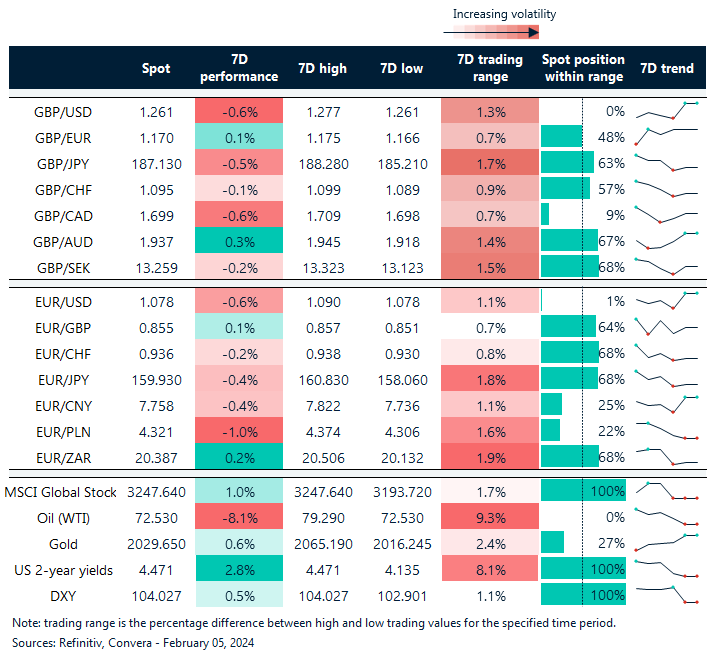
Table: 7-day currency trends and trading ranges
Key global risk events
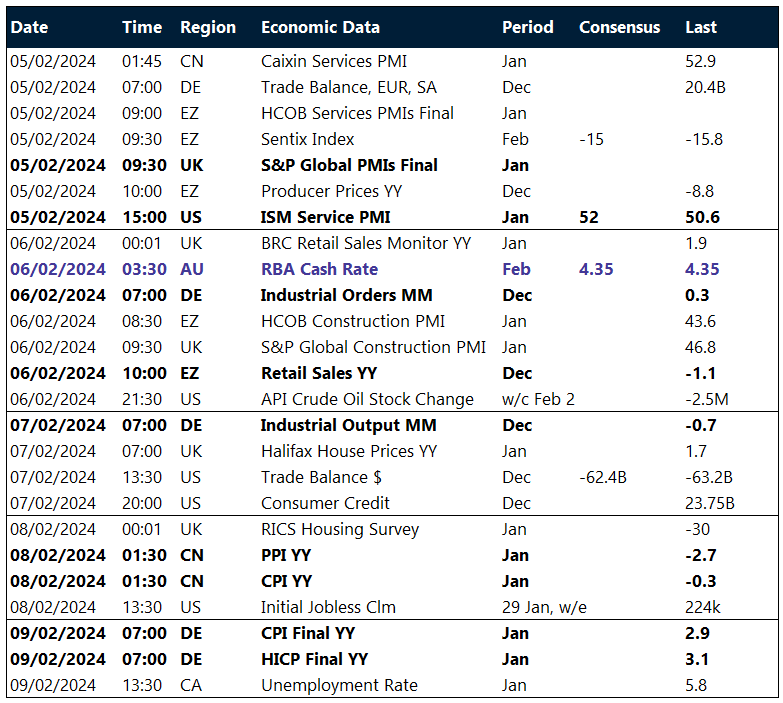
Calendar: February 5 – 9
Have a question? [email protected]
*The FX rates published are provided by Convera’s Market Insights team for research purposes only. The rates have a unique source and may not align to any live exchange rates quoted on other sites. They are not an indication of actual buy/sell rates, or a financial offer.