
Global overview
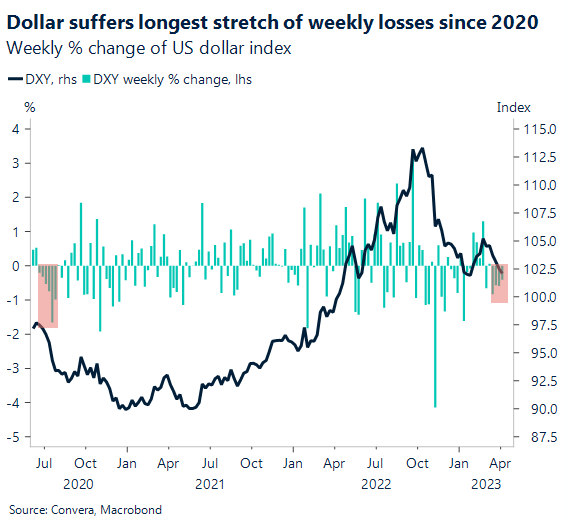
America’s sliding dollar was on track for its worst week in months and its longest losing streak in years on expectations that U.S. borrowing rates were on the brink of peaking. Down roughly 1% for the week, the dollar index was on pace for its largest fall since January and was on track for a fifth slide in as many weeks, its longest since mid-2020. The hobbling greenback allowed the Canadian dollar and UK pound to climb to two- and 10-month highs, respectively, while the euro clocked a new one-year peak. The buck suffered a one-two punch this week as markedly cooler U.S. inflation corroborated with expectations for the Fed to raise rates one more time. Moreover, dovish minutes from the Fed’s March meeting acknowledged the risk of a mild recession this year should banking system instability hinder lending. While on the defensive, the greenback still has some factors in its corner such as the Fed downplaying prospects for rate cuts this year, while the dollar index continues to hover around historically high levels just above 100. The dollar could pare its losses if U.S. retail sales should surprise to the upside and temper recession worries.
Stronger euro to be tested next week
The euro’s bullish run pushed Europe’s single currency to one-year peaks against its struggling U.S. counterpart. Central bank policy divergence remains a primary factor behind the euro’s resurgence with the ECB expected to extend inflation-fighting interest rate hikes, while the Fed is seen moving to the sidelines following an anticipated rate increase next month. Look for the euro’s stronger footing to be tested by area data next week on German investor confidence Tuesday, a midweek reading on euro zone inflation, and Friday’s preliminary look at April business activity.
Next week looms as litmus test for buoyant pound
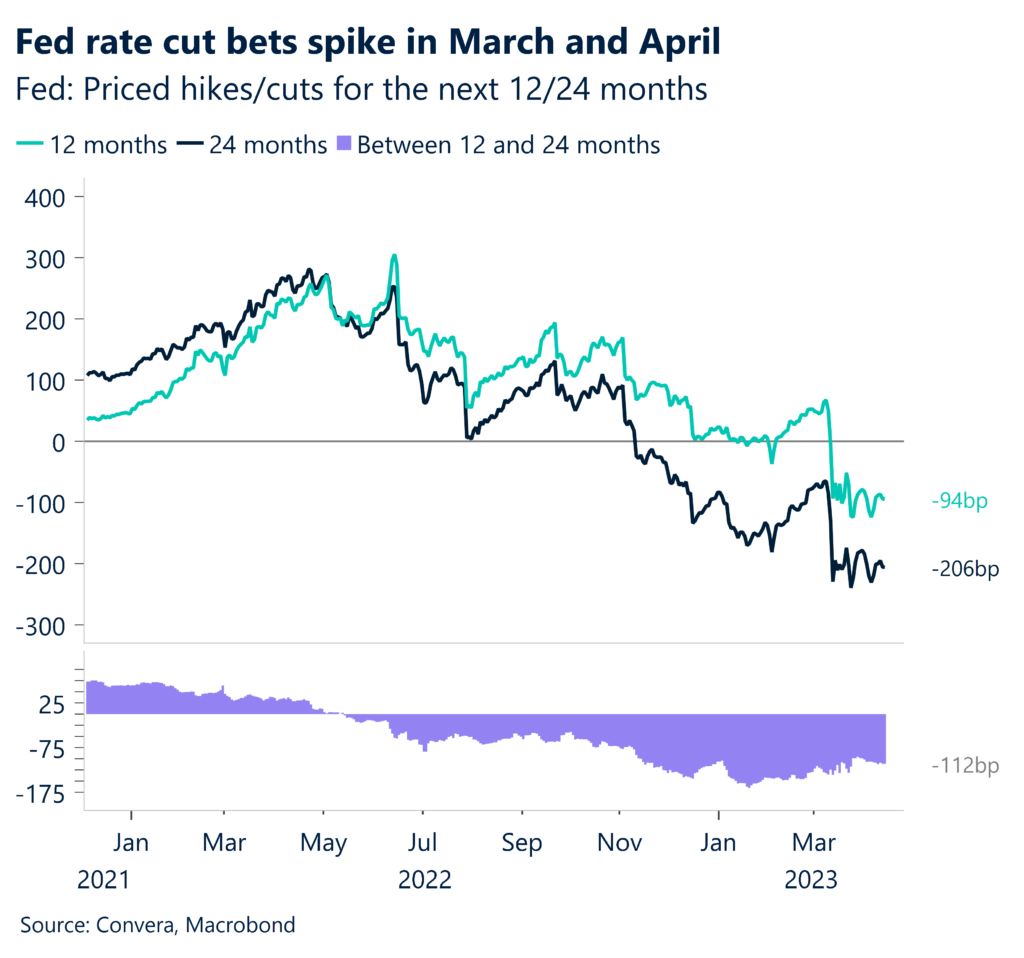
The pace of sterling appreciation slowed but not before the UK unit squeezed more juice out of a rally that’s hoisted it to June 2022 highs against its downtrodden U.S. rival. The secret sauce of sterling’s success has been expectations for UK interest rates to end the year higher than comparable U.S. lending rates. Central bank policy divergence remains a key driver of FX market sentiment, with the Fed seen close to the ending rates hikes exposing dollar vulnerabilities. Top-tier UK data next week on unemployment Tuesday, inflation Wednesday, and retail sales on Friday will hint at the degree to which sterling sentiment has brightened.

C$ bears run for the exits
Canada’s dollar was on track for a third gain in as many weeks against its depreciating U.S. rival. A jump to two-month highs moved the Canadian currency less than a cent away from 2023 highs. The loonie found a host of bullish forces this week in expectations for the Fed to soon end U.S. rate hikes, oil poised for a weekly advance, and the Bank of Canada downplaying rate cuts later this year. The loonie’s upswing has been compounded by market positioning, given that bearish bets have reached the highest level in 4 years. The more the C$ strengthens, the more the bears are forced to head for the exits, squeezing it higher.
U.S. retail sales contracted 1% in March
The dollar held above its lows despite another sobering set of data on the world’s largest economy. U.S. retail sales surprised to the downside with a 1% fall in March which outpaced forecasts of a 0.4% decline. In another sign of inflation moving in the right direction, import prices fell by a bigger than expected 0.6% in March. While the data adds to the souring in dollar sentiment, the greenback could catch a safe-haven lift if the numbers weigh on risk appetite and spur broader concerns about global growth.
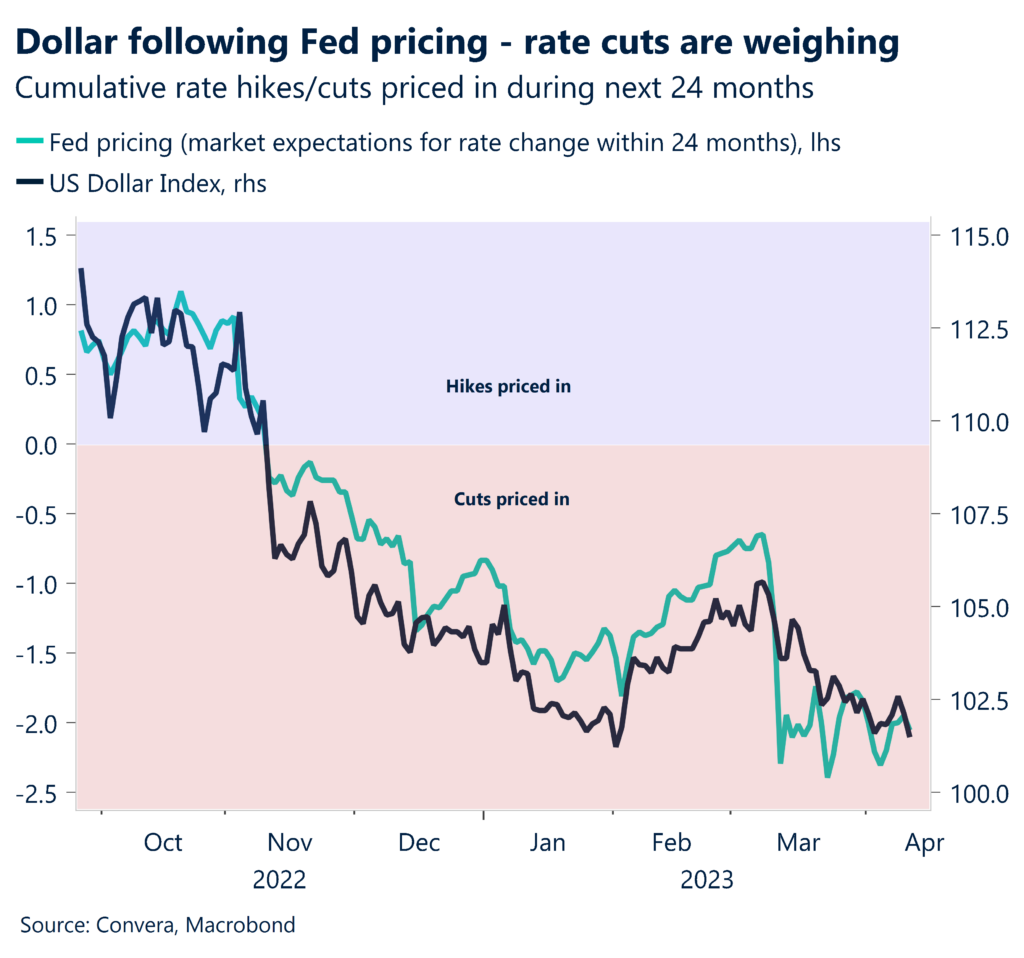
Dollar on longest losing streak since 2020
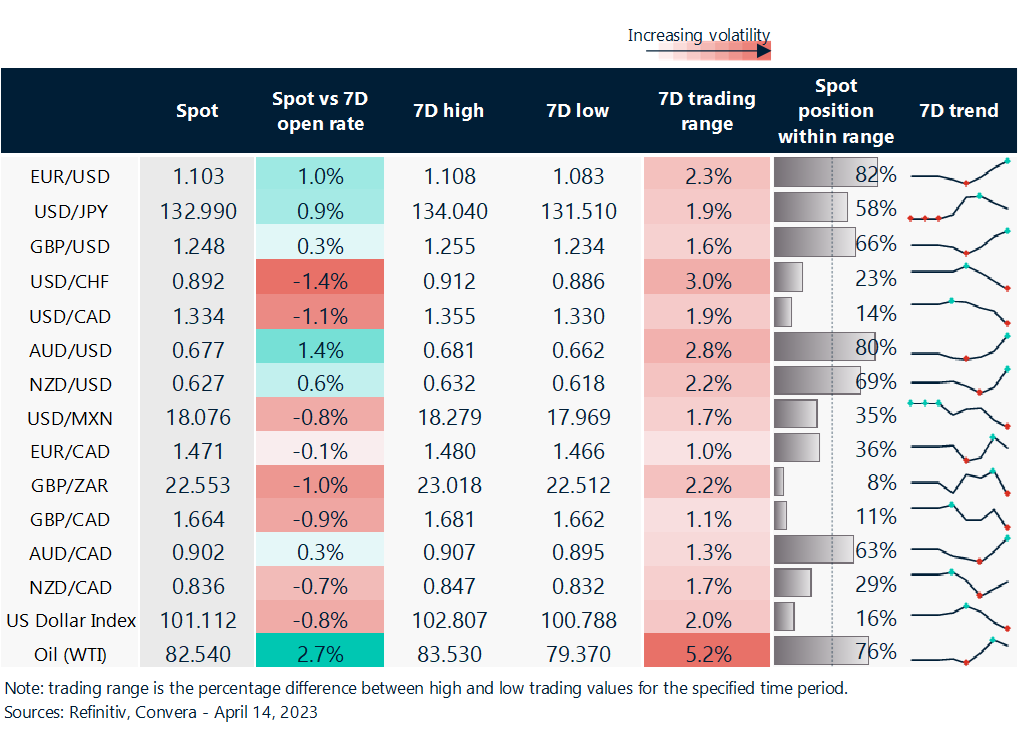
Table: rolling 7-day currency trends and trading ranges
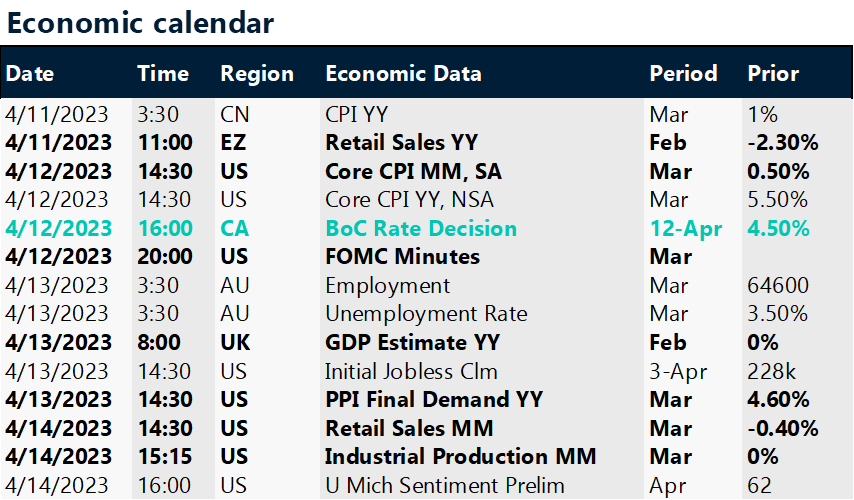
Key global risk events
Calendar: Apr 10-14
Have a question? [email protected]
*The FX rates published are provided by Convera’s Market Insights team for research purposes only. The rates have a unique source and may not align to any live exchange rates quoted on other sites. They are not an indication of actual buy/sell rates, or a financial offer.