

Key Takeaways
- The dollar is flat, as uncertainty around US-Iran conflict and upcoming CPI data keeps markets in wait mode.
- Last week, US labor market showed mixed signals: a job loss of 23,000, but a declining unemployment rate at 4.1%. The report weakens the Fed’s tightening case.
- Canada’s job gains of 75,000 surpassed expectations, making CAD the top performer among G10 currencies since the job reports double-header.
- The peso remains strong, supported by stable fundamentals and carry.
- Market dynamics hinge on US inflation data and geopolitical developments, suggesting potential volatility for the dollar.
USD: Dollar caught between oil and CPI
US-Iran headlines are keeping markets in a managed state of uncertainty. Reports of progress around Oman-Iran talks and signs from Pakistan that a diplomatic arrangement may be taking shape have helped pull Brent off session highs, lift equity futures and keep the dollar flat on the day. Still, markets need clearer US-Iran progress before treating the Strait of Hormuz risk as resolved. With markets broadly flat yesterday and CPI due tomorrow, investors are on wait mode.
Last Friday’s July jobs report gave markets a weak headline, but the macro read is more complicated. Payrolls fell by 23,000, and prior months were revised down by 103,000, yet the unemployment rate slipped to 4.1% as participation fell again. Break-even employment estimates help explain the tension. When labour-force growth slows sharply, the economy needs far fewer new jobs to keep unemployment steady.
That puts the labour market in an awkward balance. Hiring has cooled, but the unemployment rate is not giving the Fed a clear warning. Some of the weakness also came from noisy pockets, including education, retail and leisure-related hiring. The report buys the Fed time, while shifting the next major test back to inflation.
The rates backdrop is also mixed. The US 2-year yield is near 4.25%, while the 10-year has moved back toward 4.71% as oil risk keeps inflation concerns alive. A cooler CPI print would strengthen the case for holding in September and keep pressure on the dollar. A firmer print would give the hawkish side of the FOMC more support, especially with Warshspeak offering less explicit guidance.
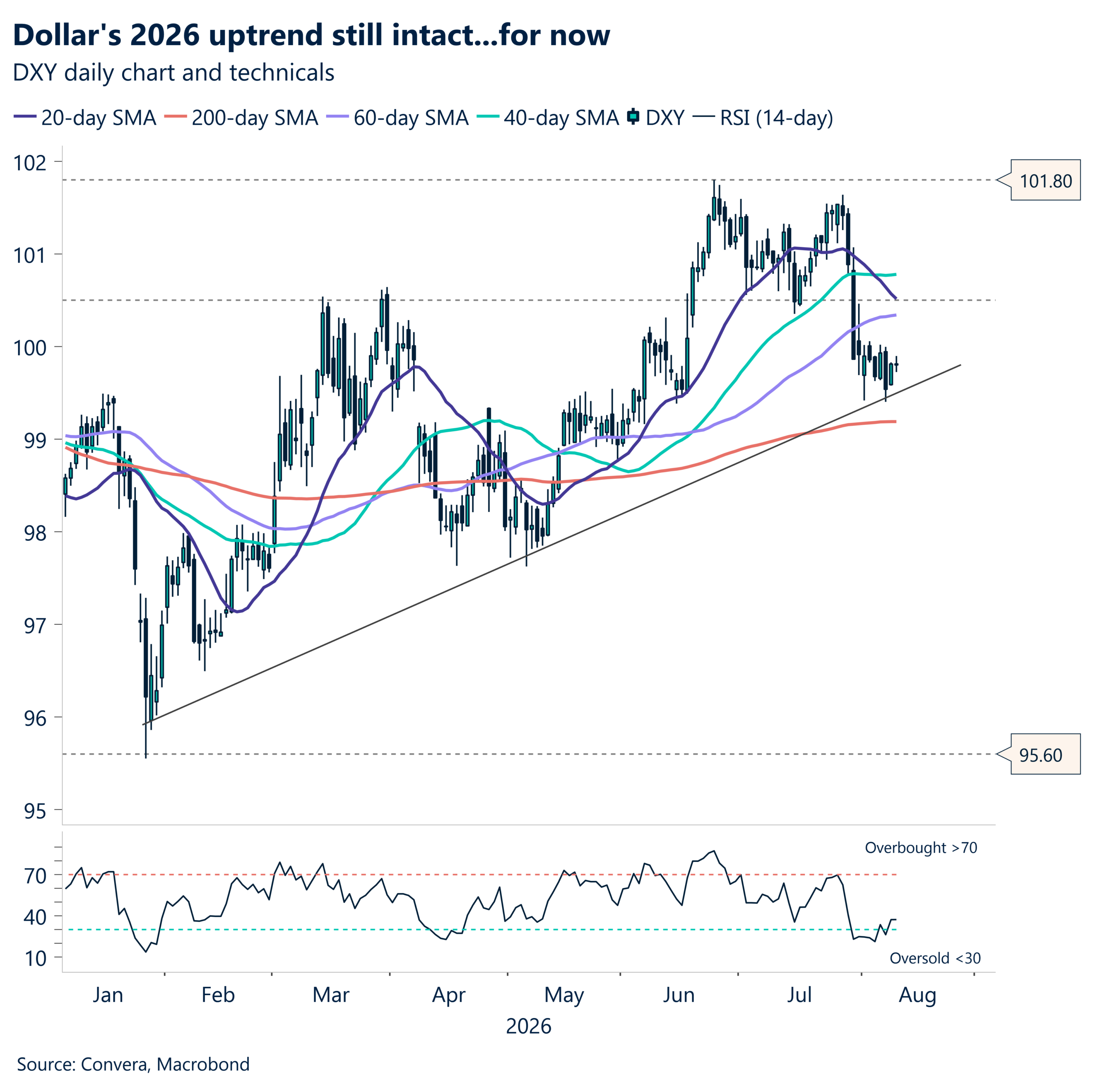
DXY is near 99.8, below its June peak of 101.8 and still stuck in a 99.50 to 100.50 range. Softer CPI or weaker retail sales could reopen the move toward 99. Higher oil, sticky inflation or a hawkish Fed pushback could bring 101 back into view. For now, the dollar is almost flat for the month, and the payroll shock has weakened its front-end rate support while geopolitics is limiting the downside.
CAD: Leads after jobs surprise
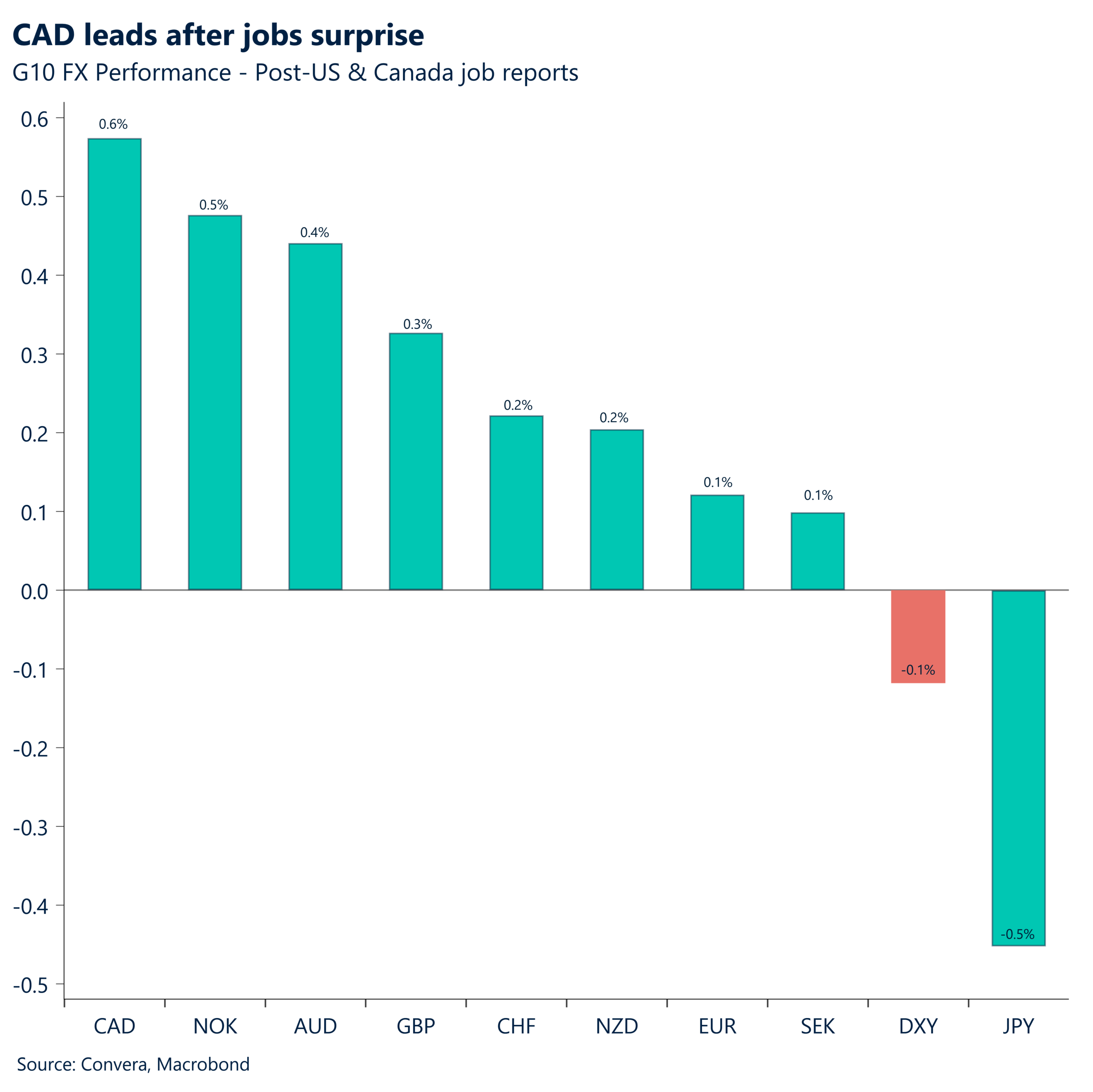
The CAD has been the best G10 performer since last Friday’s US and Canada jobs reports, up 0.6%, while DXY is slightly lower and JPY is down 0.5%. That relative move reflects a clean labour-market divergence. Canada delivered a strong upside surprise, while the US report weakened the case for aggressive Fed tightening. The result has been a stronger Loonie.
Canada added 75,000 jobs in July, well above expectations for a 20,000 gain, while the unemployment rate fell to 6.4%, its lowest level in two years. The employment rate also rose to 60.9%, showing that the improvement was not just about a smaller labour force. Job gains were concentrated in the private sector and self-employment, with hiring spread across retail, finance and real estate, professional services and construction. Wage growth cooled to 2.8% y/y from 3.3%, giving the Bank of Canada a better mix of stronger employment and softer pay pressure.
The contrast with the US was the main FX catalyst. US payrolls fell by 23,000, and prior months were revised lower by 103,000, pushing US yields down and reducing September Fed hike expectations. That helped compress US-Canada rate spreads and pulled USD/CAD below 1.40. The pair is now trading near 1.3940, after reaching its lowest level in two months on Friday.
For the BoC, the report argues for patience. Growth momentum looks better, labour slack is easing, and wage pressure is not accelerating. For USD/CAD, the next leg depends mostly on US inflation tomorrow and the August 19 tariff deadline. Softer US CPI or constructive trade headlines could extend the move toward 1.38, while sticky inflation or renewed tariff stress could help USD/CAD stabilize back above 1.40.
MXN: Peso carry holds its ground
USD/MXN is trading near 17.14, leaving the peso close to its strongest level in three months and well below the June peak around 17.61. Mexico’s two-year yield near 7.25% still offers roughly 300bp of carry over the US two-year, even after narrowing from May. Banxico helped preserve that support by holding rates at 6.50% for a second straight meeting and giving little sign that easing will resume soon. Headline inflation is near target, but core and services inflation remain sticky enough to keep the central bank cautious.
Mexico’s domestic backdrop also supports the peso. Q2 GDP rebounded 1.5% q/q after the first-quarter contraction, while international reserves have risen to about USD255.5bn. Exports remain an important cushion, especially as Mexico benefits from its role in the US AI infrastructure buildout through data-center and tech-linked shipments. That gives MXN a broader foundation than carry alone.
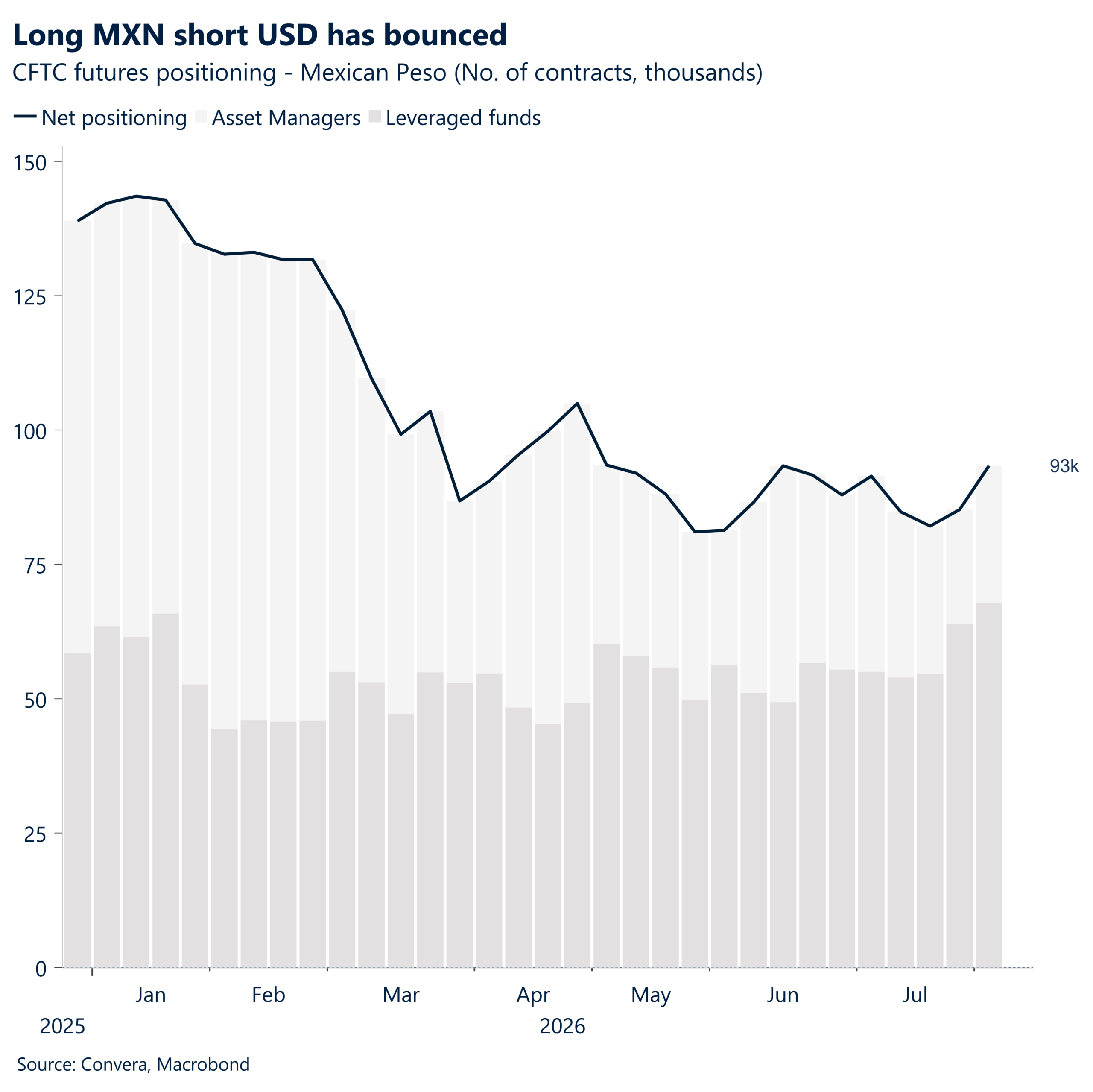
The setup is constructive, but positioning is no longer light. USD/MXN is testing the 17.14 area, and a clean break would bring 17.00 into view. Leveraged funds are already holding their largest MXN net longs since April, which raises the risk of a sharper unwind if sentiment turns. Hormuz headlines, Banxico guidance and North American trade risks are the main variables from here, but if US inflation stays contained MXN should keep the stronger carry and policy mix.
Market snapshot
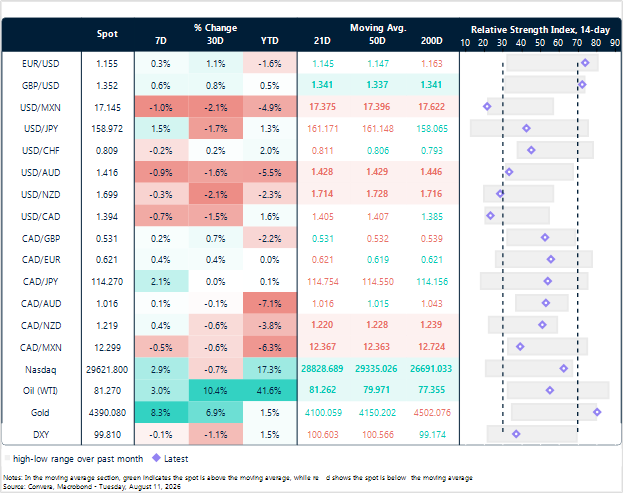
Table: Currency trends, trading ranges & technical indicators
Key global risk events
Calendar: August 10 – 14

All times are in EST
Have a question? [email protected]
*The FX rates published are provided by Convera’s Market Insights team for research purposes only. The rates have a unique source and may not align to any live exchange rates quoted on other sites. They are not an indication of actual buy/sell rates, or a financial offer.