


USD: Debasement trade returns as Jackson Hole looms
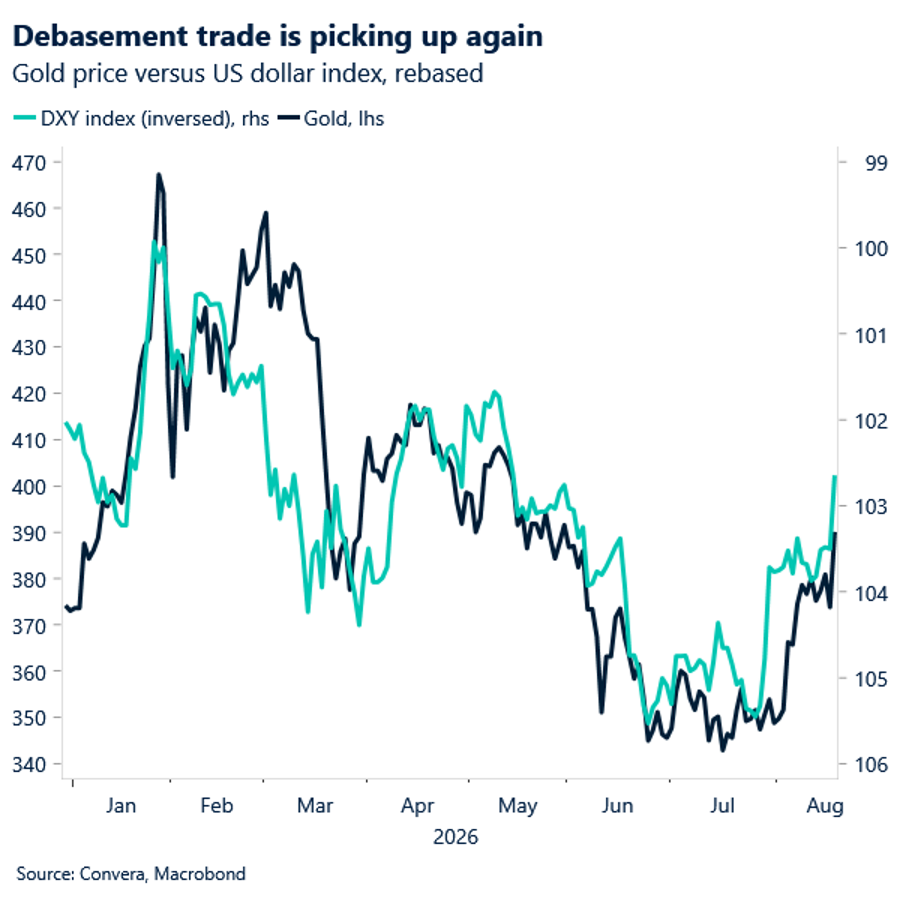
The dollar remains under pressure as investors increasingly focus on policy credibility rather than traditional macro fundamentals. While long-end Treasury yields continue to climb, the greenback has struggled to benefit, highlighting a growing disconnect between US rates and the dollar that has emerged over recent months.
The catalyst was last week’s Treasury announcement expanding long-dated bond buybacks. While intended to improve market functioning, the move has reinforced concerns around fiscal sustainability, debt issuance and the government’s growing involvement in financial conditions. As a result, 10- and 30-year yields have continued to rise, yet the dollar has weakened alongside them. Historically, higher US yields would have been a clear positive for the currency. Today, markets appear to view part of that yield premium as compensation for policy uncertainty rather than superior growth or monetary policy.
That shift has revived interest in the debasement trade. Gold and Bitcoin have both rebounded sharply, reflecting growing unease around fiscal deficits, Fed independence and the longer-term credibility of US policymaking. The backdrop is uncomfortably familiar: higher long-end yields, a softer dollar, stronger alternative stores of value and rising questions about the policy framework itself.
Jackson Hole now becomes the key event risk. Chair Warsh faces increasing pressure to reaffirm the Fed’s inflation-fighting credentials after July’s confusing policy signals. With US debt having surpassed $40 trillion and concerns around fiscal dominance resurfacing, markets will be looking for a clear commitment to the 2% inflation target and reassurance that policy decisions remain insulated from political pressure.
Bottom line: rising yields are no longer automatically translating into dollar strength. Until investors regain confidence in the broader US policy framework, gold and Bitcoin are likely to remain beneficiaries while the dollar struggles to fully reflect elevated rates.
EUR: More constructive, but euro still needing its own story
The euro continues to benefit from a softer dollar backdrop, with EUR/USD closing almost 1% higher last week and trading near three‑month highs around 1.17. The shift has been driven primarily by the US side of the equation, as questions grow around the Fed’s future policy path, the outlook for US fiscal policy, and the durability of the dollar’s yield advantage.
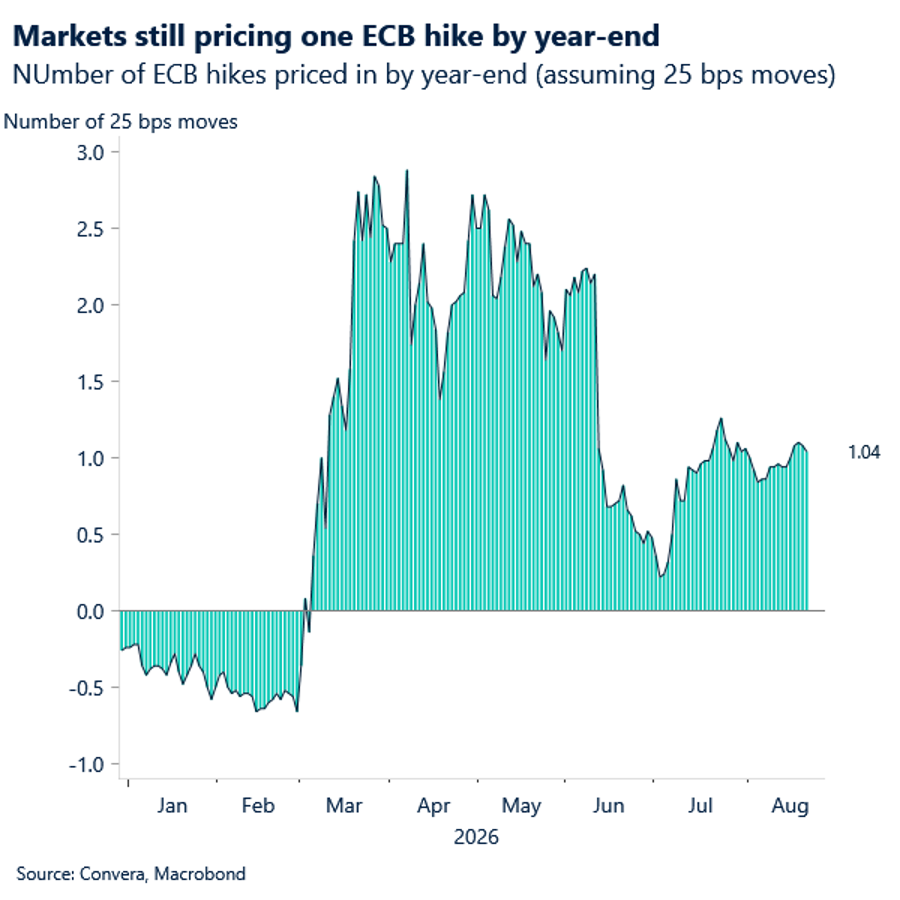
As a result, we have become somewhat more constructive on EUR/USD than earlier in the summer. Markets have pushed the first fully priced Fed hike out to 2027, while expectations for further ECB tightening remain intact, helping support relative rates in the euro’s favour. That changing backdrop is increasingly visible in options markets too, where risk reversals across multiple tenors have turned euro‑bullish, signalling improving sentiment toward the single currency.
However, we remain cautious about extrapolating recent gains too aggressively. The euro’s rally still looks heavily dependent on USD weakness rather than EUR strength, and that distinction matters. While growth and inflation data have generally surprised positively in the eurozone, the region remains vulnerable to elevated food and energy costs stemming from the ongoing in the Middle East.
For EUR/USD to mount a sustained push toward 1.18–1.20, we believe the euro needs its own catalyst. A more durable easing in energy prices would improve the eurozone’s terms of trade, reduce inflation pressure, and ease concerns that ECB tightening comes at the expense of growth.
For now, the bias has turned more constructive, but meaningful upside still requires a stronger euro story, not just a weaker dollar story. Jackson Hole later this week should provide the next important test.
GBP: Sterling supported, budget risks linger
Friday capped the week with a mixed batch of UK data, including retail sales and PMIs. Combined with last week’s softer jobs report and inflation print, the case for a Bank of England hold through the rest of the year looks increasingly compelling. Rising oil prices amid ongoing Middle East tensions pull in the opposite direction, however, and markets still need more evidence before pricing out the remaining 25bps increase currently embedded by year-end.
Against this backdrop of a largely paralysed rate outlook, sterling continues to benefit from its position as one of the highest-yielding currencies in the G10, attracting ongoing carry trade demand.
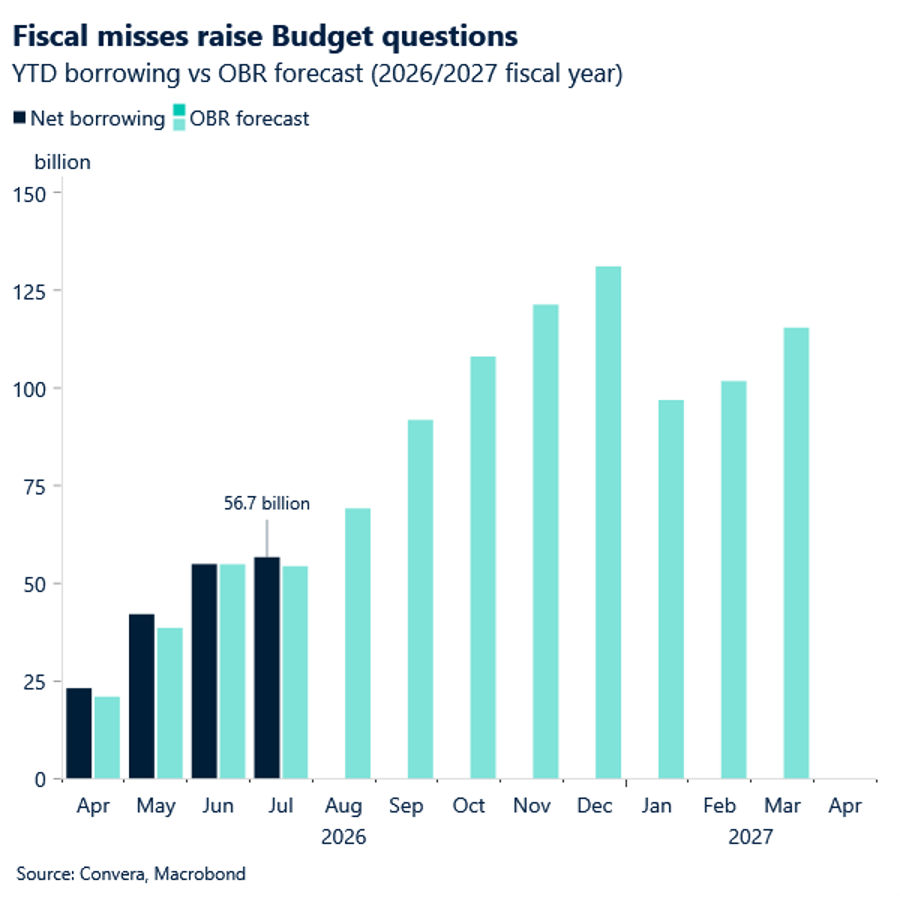
What I found most interesting last week was the July budget deficit data. Spending exceeded revenue by £1.8bn in a month that typically benefits from a boost in self-assessed income tax receipts. The budget was expected to balance. Instead, it highlighted mounting pressure on the public finances, driven in part by higher borrowing costs. That leaves Chancellor John Healey facing a difficult balancing act ahead of the Autumn Budget. We see this as the clearest catalyst for a more bearish sterling outlook into year-end, especially as debasement risks start to re-enter market chatter.
Looking ahead, GBP/USD remains largely a dollar story. Initial support sits around 1.36, followed by 1.3540, while a move towards 1.37 remains a realistic possibility heading into Jackson Hole.
For GBP/EUR, the calendar is relatively light, with little on the data front and few key central bank speakers due. We therefore expect broadly neutral price action. Buying interest appears to be emerging around 1.1650, while 1.17 continues to act as a near-term ceiling. That range should broadly hold, although we see a modest risk of a downside break given GBP/EUR still looks overvalued relative to current rate differentials.
Market snapshot
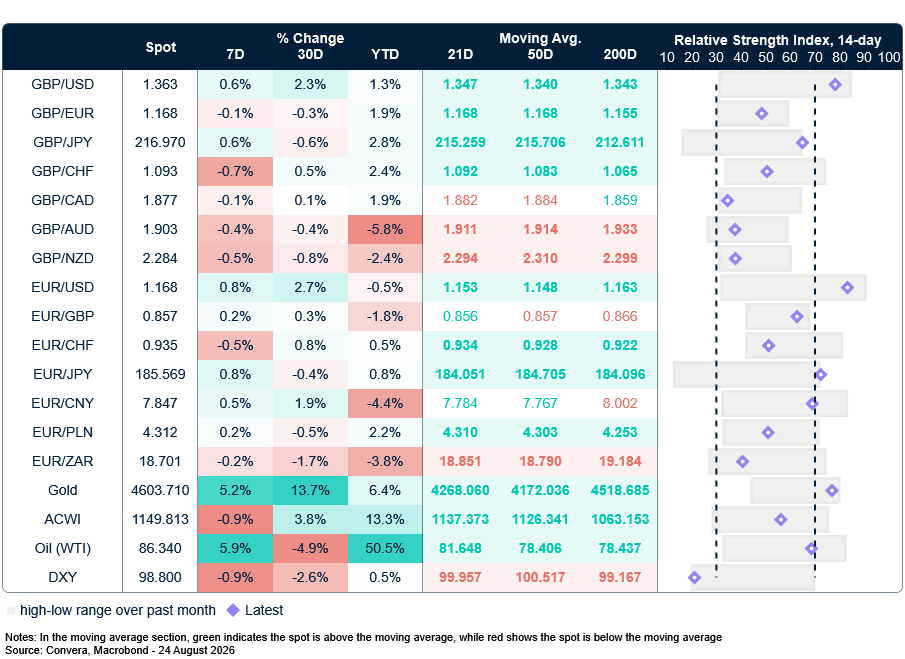
Table: Currency trends, trading ranges & technical indicators
Key global risk events
Calendar: August 24-28
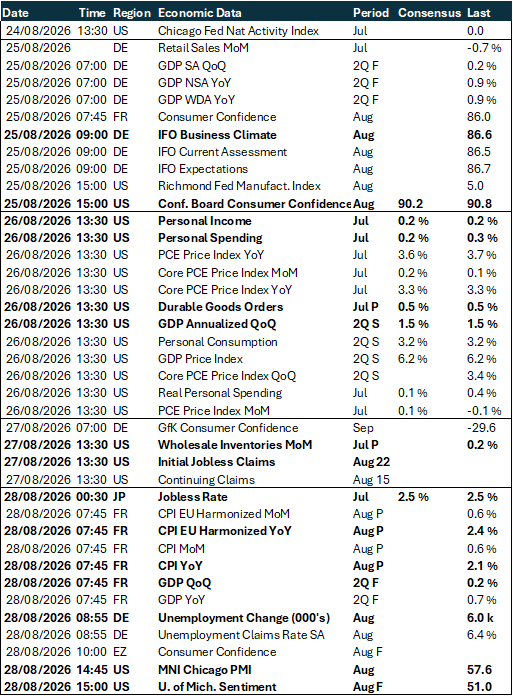
All times are in BST
Have a question? [email protected]
*The FX rates published are provided by Convera’s Market Insights team for research purposes only. The rates have a unique source and may not align to any live exchange rates quoted on other sites. They are not an indication of actual buy/sell rates, or a financial offer.