
Hidden fees, foreign exchange (FX) volatility, compliance requirements, and operational inefficiencies make cross-border payments a challenge for small and mid-sized businesses (SMBs). Left unaddressed, these issues can stifle business growth and operational agility. The good news is that businesses can solve many of these challenges with the right infrastructure, tools, and support.
By focusing on transparency, predictability, and risk management, SMBs can turn cross-border payments from a liability into a strategic advantage.
Checklist for mastering cross-border payments as a small business:
- Tackle hidden costs
- Manage volatility and settlement times
- Mitigate FX risk
- Maintain compliance requirements
- Seek expert support
Tackling hidden costs: Fee transparency and reconciliation
One of the most persistent frustrations in cross-border payments is the lack of fee transparency.
“For a very small business, like us, cross-border payments are quite a complex field, and hidden costs are a very irritating thing,” says Berni Hambleton, founder of Sterling IP.
For example, businesses may send an invoice expecting a certain amount to arrive, only to discover that intermediary banks have deducted fees along the way. These “lifting fees” complicate reconciliation and accounting and make it difficult to forecast true costs.
As Scott Johnson, Vice President of Technical Program Management at Convera, explained during a recent PYMNTS webinar, many of these hidden costs stem from the way payments are routed.
“I would encourage SMBs to talk to their providers about the underlying payment network that they use to remit payments,” Johnson says. “A lot of the hidden fees that happen in cross-border payments happen when multiple banks are handling a payment of intermediaries in the middle, who need to basically charge rent for moving that money from point A to point B.”
More sophisticated payment providers address this problem by building extensive local payment and bank account networks. Instead of sending a single international wire that passes through multiple intermediaries, they execute local payments on each end of the transaction.
“At Convera, we have bank accounts in dozens and dozens of countries around the world, which means if you’re sending payment from, say, the UK to the US, we’re doing two local payments. We’re doing a UK-UK payment and a US-US payment, which entirely avoids lifting fees,” Johnson says. “It means you can have certainty that the entire principal amount will land in your beneficiary’s bank account.”
For SMBs, this level of transparency simplifies reconciliation and accounting, reduces administrative overhead, and eliminates unpleasant surprises after payments are sent.

Predictability over speed: Managing volatility and settlement times
While speed is often marketed as the primary differentiator in payments, predictability is frequently more valuable for SMBs.
In a volatile macroeconomic environment, uncertainty around settlement timing and FX exposure can quickly undermine growth prospects. Payment delays can disrupt supply chains, while unexpected FX movements can inflate costs between the time an invoice is issued and when it is paid.
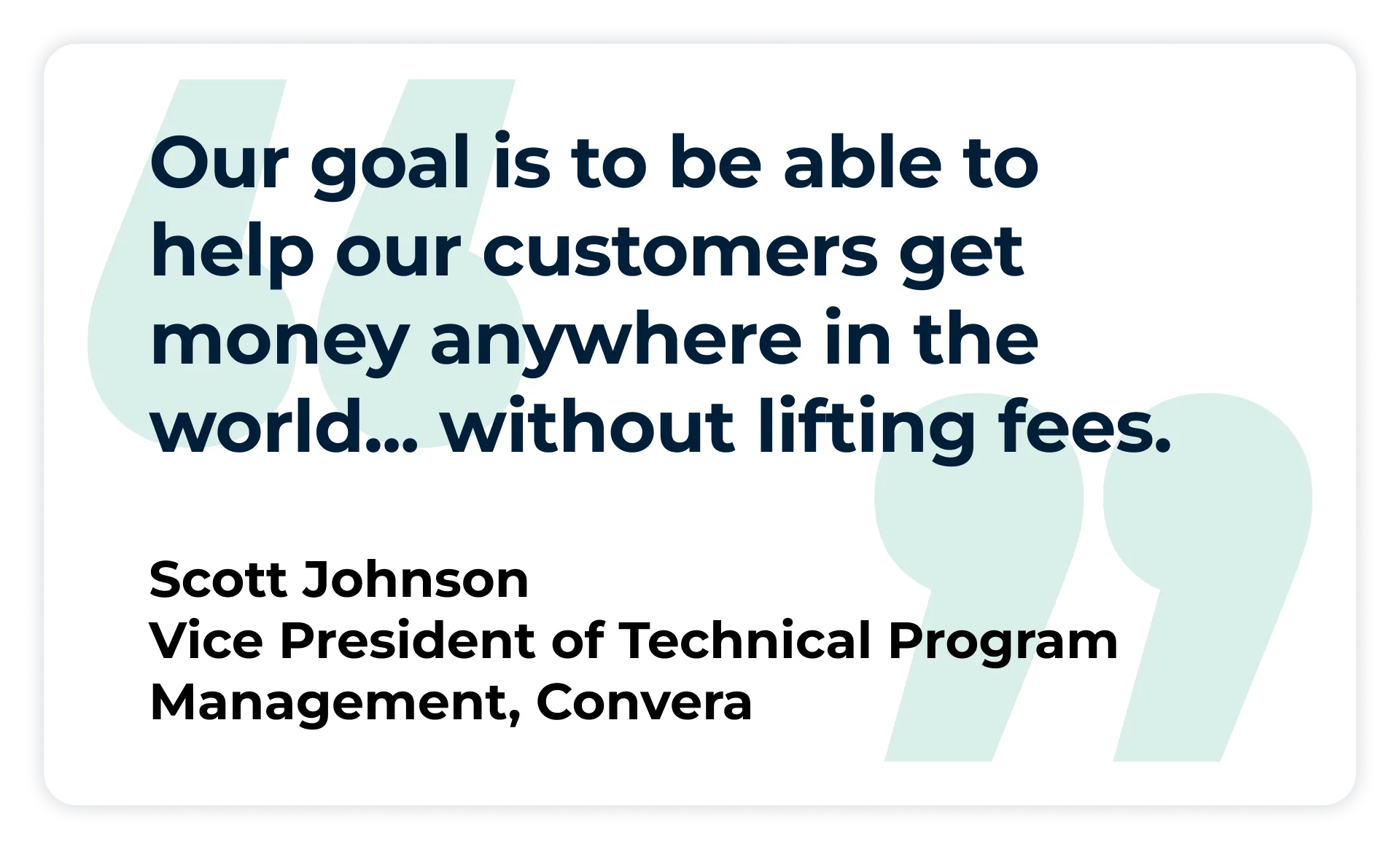
“We know the world’s a volatile place right now,” Johnson says. “Our goal is to be able to help our customers get money anywhere in the world when they need it, quickly, reliably, and without lifting fees.”
For SMBs, predictable settlement times support more accurate working capital management and reduce the need to hold excess cash as a buffer against uncertainty. Knowing exactly when funds will settle enables better cash flow planning and operational decision-making.
Mitigating foreign exchange risk with simple tools
FX risk is often viewed as a concern reserved for large multinational corporations, but SMBs are arguably more exposed to it. Smaller margins and less financial flexibility mean that adverse currency movements can have an outsized impact.
“Most of my business is with China, and the biggest variables for us are shipping rates and currency,” says Rob Phillips, CEO of Global Material Sourcing. “We are obviously exposed to commodity prices too, so if steel goes up, our buying price goes up. But the variables that can change most from when we accept an order to when we deliver it are currency and shipping charges.”
Fortunately, mitigating FX risk does not require overly complex strategies. Tools such as FX forwards, budget rates, and structured hedging programs can provide meaningful protection when used thoughtfully. Philips, for example, uses forward contracts to protect his budget from currency volatility.
SMBs can set budget rates at the beginning of the year and then build effective hedging strategies to achieve those targets by year-end.
“[Small businesses] can take some of the complexity of FX away from those costs, which means, ultimately, our customers can price effectively and ensure that they’re protecting their bottom line in a volatile macroeconomic environment,” Johnson says.
Compliance and efficiency for small businesses
Cross-border payments also carry regulatory and compliance obligations, including know-your-customer (KYC), anti-money laundering (AML), and sanctions screening requirements. For SMBs, managing these requirements internally can be burdensome and resource-intensive.
Working with a provider that embeds compliance into its payment infrastructure allows businesses to remain compliant without slowing down operations. Automated checks, standardized workflows, and consistent documentation reduce risk while improving efficiency.
Additionally, providers with local banking relationships are better positioned to navigate country-specific regulations, reducing payment failures and delays caused by incomplete or incorrect information.
The human factor: Why expert support and proactive nudges matter
Technology alone is not enough. Global payments intersect with strategy, risk management, and long-term planning — areas where human expertise continues to play a critical role.
SMBs benefit from access to experts who can help interpret market conditions, evaluate hedging options, and adjust strategies as circumstances change. Proactive guidance, reminders, and “nudges” can help businesses act before volatility impacts results, rather than reacting after the fact.
“We’re continually working with our bank providers to open accounts in additional local markets to enable us to serve customer needs, whether that’s paying for things or getting paid for things,” Johnson says. “We’re equally investing in our bank account network for receiving payment across borders to avoid all of these hidden fee issues both ways.”
By prioritizing fee transparency, settlement predictability, FX risk management, and compliance efficiency — and by partnering with experienced cross-border payment providers that combine robust infrastructure with expert support — businesses can protect budgets and operate with greater confidence.
Learn how Convera can help your small business.
*Convera’s hedging products are derivative financial instruments which may expose you to risk should the underlying exposure you are hedging cease to exist. They may be suitable if you have a high level of understanding and accept the risks associated with derivative financial instruments that involve foreign exchange and related markets. If you are not confident about your understanding of derivative financial instruments, or foreign exchange and related markets, we strongly suggest you seek independent advice before deciding to use these instruments.